
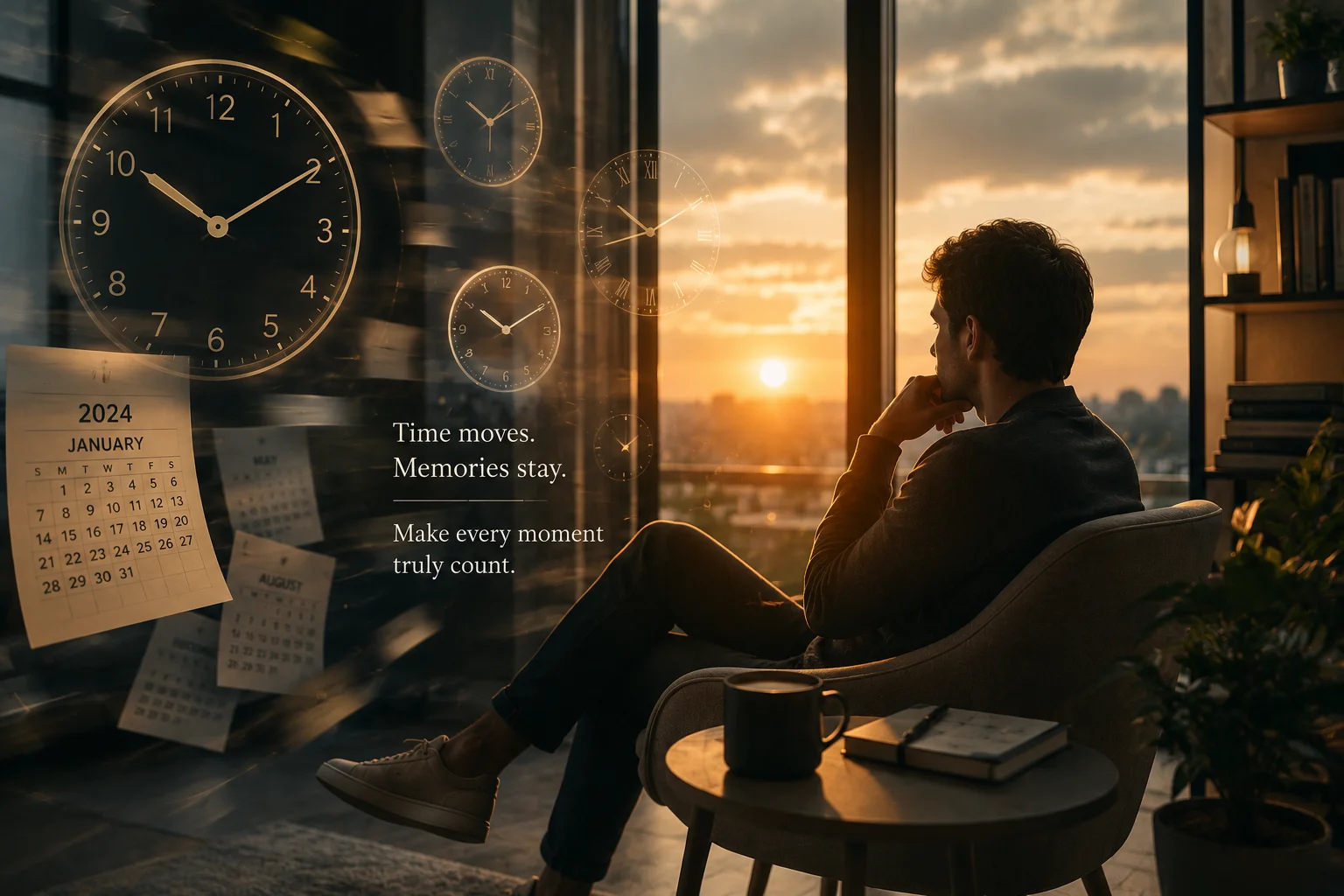
Almost everyone notices the same strange pattern in life.
When you were a child, one year felt incredibly long.
Summer vacations felt endless.
Waiting for birthdays felt like forever.
A school year seemed never-ending.
But as people grow older, something unusual happens.
Weeks begin passing quickly.
Months disappear unexpectedly.
Entire years seem to fly by.
Many people suddenly realize they are saying the same sentence more often:
“I can’t believe how fast time is going.”
So why does this happen?
Is time actually moving faster?
Of course not.
But the way the human brain experiences time changes significantly throughout life.
The Brain Measures Time Through Experiences
One important reason time feels slower during childhood is simple:
Children experience new things constantly.
Think about early life.
For a child, almost everything feels new:
- First day at school
- Learning to ride a bicycle
- First friendships
- First family vacations
- Learning new skills
- Discovering new places
The brain pays much more attention when experiencing something unfamiliar.
Because the brain records more details, those periods feel longer when remembered later.
Adults Live More on Autopilot
As people get older, life becomes repetitive.
Many adults follow nearly identical routines every day.
Wake up.
Check phone.
Go to work.
Repeat similar conversations.
Follow similar schedules.
Come home.
Sleep.
Repeat.
When life becomes predictable, the brain processes fewer new experiences.
As a result, time feels compressed.
Entire weeks can disappear because the brain records fewer memorable details.
Novel Experiences Slow Down Perception of Time
Psychologists have observed something fascinating.
When people try new experiences, time often feels slower.
Examples include:
- Traveling somewhere new
- Learning a language
- Starting a new hobby
- Visiting unfamiliar places
- Meeting new people
- Changing routines
Why?
Because the brain becomes more active.
It processes more information and creates stronger memories.
More memories make time feel fuller.
The Percentage Theory
Another interesting explanation involves age itself.
For a five-year-old child:
One year represents 20% of their entire life experience.
For a fifty-year-old adult:
One year represents only 2% of life experience.
Because younger people have experienced fewer total years, each year feels proportionally much larger.
As age increases, each passing year feels relatively smaller compared to total life experience.
This creates the feeling that time moves faster.
Digital Life Is Speeding Up Daily Experience
Modern technology is also affecting how people experience time.
Today, many people constantly consume fast information:
- Short videos
- Social media scrolling
- Instant messaging
- Rapid entertainment
- Constant notifications
The brain rarely gets moments of boredom or quiet reflection.
Everything moves quickly.
This constant stimulation creates a feeling that days pass faster than before.
Routine Creates Invisible Time Loss
One reason many adults feel life passes quickly is repetition.
Imagine two weeks.
Week one:
You follow your exact normal routine every day.
Week two:
You travel, meet new people, and try new experiences.
Which week feels longer afterward?
Usually week two.
The more routine life becomes, the faster time seems to disappear.
Stress Can Distort Time Perception
Mental stress changes how people experience time.
When constantly worrying about:
- Work
- Finances
- Responsibilities
- Family obligations
- Deadlines
People often become mentally disconnected from the present moment.
Instead of fully experiencing life, the mind stays focused on future problems.
This makes days blur together.
Why Childhood Feels So Different
Think about childhood memories.
People often remember:
- Specific smells
- Small details
- Tiny moments
- Emotional experiences
- Simple activities
Why?
Because children observe life carefully.
Adults often stop paying close attention.
The brain begins filtering repetitive experiences automatically.
This reduces awareness of daily life.
How To Make Life Feel Slower Again
The good news is simple.
You can change how you experience time.
Helpful habits include:
Break Routine Frequently
Change normal patterns regularly.
Learn Something New
New skills force the brain to engage deeply.
Reduce Constant Digital Stimulation
Less screen time often improves awareness.
Travel or Explore Locally
New environments create stronger memories.
Practice Mindfulness
Paying attention to small daily moments increases awareness.
Be More Present
Many people physically experience life while mentally living somewhere else.
Presence changes perception.
The Most Valuable Resource Is Not Money
People spend enormous effort chasing money.
But the one resource nobody can recover is time.
Understanding how the brain experiences time helps people appreciate life differently.
Sometimes life feels fast not because time changed.
But because we stopped fully noticing it.
Final Thoughts
Time does not actually move faster as we age.
Our perception changes.
Routine, digital overload, repetition, stress, and fewer new experiences cause the brain to process life differently.
The more intentional and present people become, the fuller life begins to feel.
Perhaps the real goal is not trying to stop time.
It is learning how to experience more of it.
Because often, life feels short not because time disappeared…
But because we were too distracted to notice it.




Join The Discussion